Petition for urgent intervention in case of forced eviction, atrocities against Scheduled Tribe families in Barnawapara Wildlife Sanctuary in Chhattisgarh – January 2018
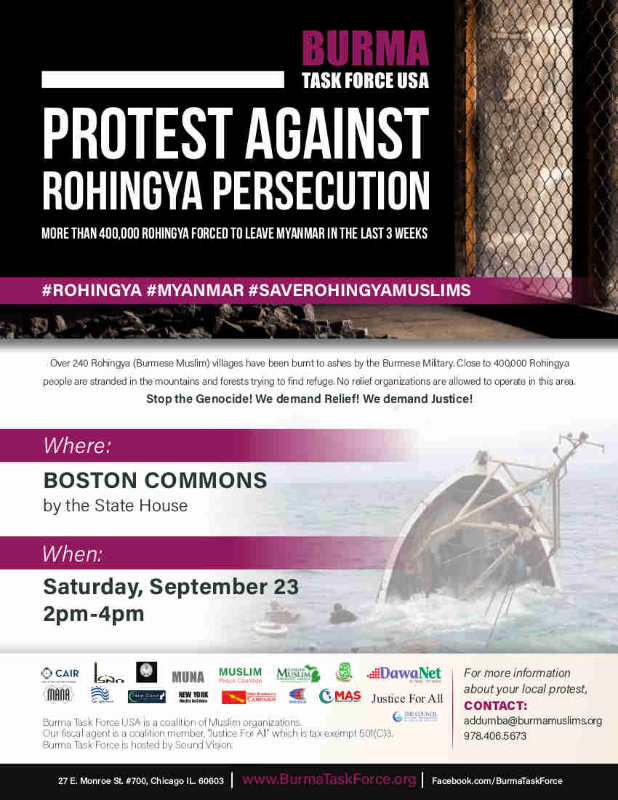
Mass Violence on the Rohingya People – Nov 20, 2017
The Rohingya People:
Mass Violence in Myanmar
Since late August more than half a million people belonging to a minority group have left their homes in western Myanmar, (Burma) in what the UN describes as “a textbook case of ethnic cleansing”.
The panel members have all undertaken extensive research on the ground in western Myanmar, and will explore what factors have motivated the violence, and why there appears to be mass support among the Myanmar public for the military’s campaign against the Rohingya.
Mon, November 20, 2017
05:00pm – 06:30pm
CGIS South, Tsai Auditorium S010
1730 Cambridge Street
Cambridge, MA 02138
PANELISTS:
FRANCIS WADE
Journalist and author of “Myanmar’s Enemy Within Buddhist Violence And The Making Of A Muslim ‘Other’”
KYAW HSAN HLAING
Founder and Executive Director of the Peace and Development Initiative (Kintha) in Rakhine State, Burma.
MOHAMMAD MUSTAK ARIF
Founder of the Rohingya Society of Greater Nashua (RSGN).
MODERATOR:
KATE CRONIN-FURMAN
Postdoctoral Research Fellow, International Security Program at Harvard Kennedy School’s Belfer Center.
Co-sponsored by Asia Center, Radcliffe Institute for Advanced Study and Lakshmi Mittal South Asia Institute.
Conference on 100th Anniversary of Balfour Declaration – Nov 11, 2017
Inequality and Agrarian Crisis in Rural India
Association for India’s Development – MIT, Boston & Metro west Chapters
and the
Alliance for a Secular and Democratic South Asia
Inequality and Agrarian Crisis in Rural India
A talk by P. Sainath
Thursday, September 28th, 7:00pm
MIT #6-120
182 Memorial Drive,
Cambridge MA 02139
(Walkable from Kendall and Central T-stops)
P.Sainath, the winner of the 2007 Magsaysay Award and former Rural affairs editor of The Hindu is here to talk about the agrarian crisis and the growing inequality in India. He was the first Indian to win the Magsaysay in that category in nearly 25 years (after R.K. Laxman). He was also the first reporter in the world to win Amnesty International’s Global Human Rights Journalism Prize in its inaugural year in 2000. Sainath’s work includes a series on the devastation of Indian agriculture by anti-farmer policies this past decade, which runs in The Hindu. Consisting of detailed reports from the households of landless laborers and marginal farmers across the country, the series has set the agenda for investigative rural reporting.
One of his hallmark projects, the People’s Archive of Rural India (PARI) was launched on Dec. 20, 2014. The PARI website is aimed at recording the everyday lives of everyday people; it hosts the video, still photos, audio, and text articles. The website is not-for-profit and free to view; techies, lawyers, and accountants – are volunteers. The website hopes to grow by all the contributors – journalists, writers, film-makers, editors, translators, public participation. Anybody can send pictures, text articles, photo stories, films – as long as they fit PARI’s mandate – ‘the everyday lives of everyday people’. You can read up more about the website here: PARI
Free and Open to all
Rally against the ethnic cleansing of Rohingya People – Sept 23, 2017
Water Future of South Asia: Divided by borders, connected by rivers – May 9, 2017
Tuesday 7 pm, May 9, 2017
MIT
Room 2-146
Speaker: Jayanta Bandyopadhyay
Jayanta Bandyopadhya, environmental activist and professor, author of fourteen critically acclaimed books, is the former head of the Center for Development and Environment Policy at the Indian Institute of Management Calcutta.
The Himalaya is the climate maker and water tower of Asia. Himalayan rivers feed the large economies of Bangladesh, China, India, Thailand, Vietnam, etc. About 3 billion people depend on waters from the Himalaya. The rivers are diverse and feed into the lives and livelihood of vast populations in the countries of South Asia – peaceful sharing of water across boundaries is therefore imperative.
Following the Look East policy of the Government of India, attention has been focused on the Brahmaputra and future options for its governance. Challenges include floods and erosion; hydro-power projects, possible transfer of water outside the basin, water-based transportation, and ecosystem services in all parts of the basin.
A trans-boundary organization among Bangladesh, Bhutan, and India is proposed for future governance of the Brahmaputra sub-basin.
Organized by:
Alliance for a Secular and Democratic South Asia
The South Asia Forum at MIT
Women’s and Gender Studies at MIT
Bangladesh and the Politics of Rights – Feb 19, 2017
Alliance for a Secular and Democratic South Asia
Presents
Bangladesh and the Politics of Rights
A talk by Sara Hossain
Sunday 2 PM, February 19, 2017
@ MIT
77 Mass Ave
Room 4-231
Bangladesh made significant strides in a number of areas since its emergence as a country in 1971, but its achievements have been marred by political instability and the suppression of civil and human rights. Attacks on workers, critics, and political opponents by state forces have seen a steady rise through different administrations. The latter meanwhile has failed to protect bloggers, publishers, and minorities from attacks by religious extremists. Often the only recourse to persecuted individuals and groups has been the work of independent lawyers, activists, and groups.
Sara Hossain has consistently challenged discriminatory laws against women and secular activists, including “fatwa”s issued to mete out degrading and violent punishments to women and girls. She is a lawyer at the Supreme Court of Bangladesh and an honorary executive director of Bangladesh Legal Aid and Services Trust (BLAST). Her awards include the 2016 International Women of Courage Award, the Ananya Top Ten Leading Women Award in 2005, and the Human Rights Lawyer Award by The Lawyers Committee for Human Rights (now Human Rights First).
Co-sponsors:
Women’s and Gender Studies Program
South Asia Forum at MIT
Boston Women’s March – Jan 21, 2017
Book Presentation: Bil’in and The Nonviolent Resistance – Dec 1, 2016
Thursday, December 1, 2016
7:00 PM @ Friends Meeting House 5 LongFellow Park, Cambridge, MA
Book Presentation: Bil’in and The Nonviolent Resistance
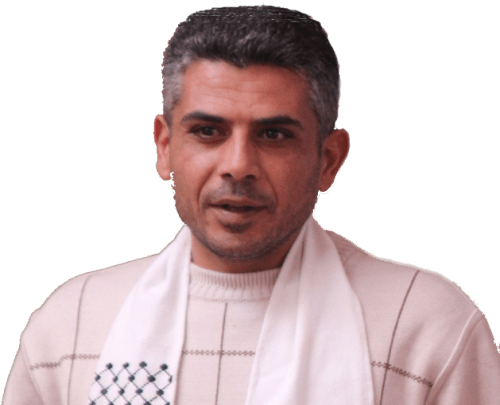
Iyad Burnat is the coordinator for the Popular Committee in Bil’in, Palestine. For 10 years, Iyad and the Popular Committee of this small village have held weekly non-violent demonstrations against the confiscation of their land. They have repeatedly been met with violence by the Israeli military. Iyad is coming to the Boston area to describe what life is like under Israeli occupation, his village’s ongoing struggle for justice and freedom, and what inspires him to continue non-violent resistance.
Iyad is the winner of the 2015 James Lawson Award for Achievement bestowed by the International Center for Nonviolent Conflict during its summer institute at Tufts University.
Sponsored by:
United for Peace with Justice
https://www.facebook.com/justicewithpeace
Cosponsors: Alliance for a Secular and Democratic South Asia; Alliance for Water Justice in Palestine; American Friends Service Committee; Boston Coalition for Palestinian Rights; Friends of Sabeel – New England Chapter; Interfaith Peace-Builders; Jewish Voice for Peace, Boston
 Alliance for a Secular and Democratic South Asia
